

Dobro Pole is a locality on the border between Macedonia and Greece, hidden in the rugged and hard-to-reach region of Mariovo. More than a century ago, a battle took place here that would hasten the end of the Great War, later remembered as the First World War.
In September 1918, the Allied offensive launched here shattered the Macedonian Front and compelled Bulgaria to seek an armistice. This marked the beginning of a chain reaction that would soon bring the other Central Powers to the brink of collapse.
This is the story of Dobro Pole — the place where the end of the Great War began.
Text and photographs: Jove Pargovski, OFF ROAD Macedonia
Contents
- The Macedonian Front in the Summer of 1918
- Preparations for the Allied Offensive
- Why Was Dobro Pole Chosen?
- The Bulgarian Army Before the Attack on Dobro Pole
- Balance of Forces Before the Offensive
- September 14 — Artillery Preparation for the Offensive
- September 15 — The Battle of Dobro Pole
- Dojran — The Bulgarian Victory
- Prilep, September 18 — The Last Attempt to Change the Course of Events
- Dobro Pole and the Road to the Thessaloniki Armistice
- The Domino Effect — From the Bulgarian Armistice to the End of the War
- Macedonian Soldiers at the Battle of Dobro Pole and on the Macedonian Front
- Dobro Pole After the War and the “Bronze Hand” Monument
- Dobro Pole Today
- Event: Dobro Pole — 15 September 1918 / 2018
- How to Get to Dobro Pole
- Literature and Sources
The Macedonian Front in the Summer of 1918
In the summer of 1918, the balance of power on the Macedonian Front was increasingly shifting in favor of the Allies. After almost three years of warfare, Bulgaria and its army were severely exhausted. The war had lasted longer than planned, and the heavy human losses, shortages of food and military supplies, and poor economic conditions had taken a serious toll on the country and its army.

Fatigue and declining morale were increasingly evident among Bulgarian units. Supplies of food, ammunition, clothing, and other equipment had become more difficult, while opportunities to replace losses and send fresh reinforcements were limited. The prolonged presence at the front further increased discontent among the soldiers [2].
The gradual reduction in German support created an additional problem. During 1918, Germany transferred a substantial part of its forces to the Western Front, where it launched a major offensive in the spring. The failure of the German offensive, together with the gradual arrival of fresh American troops and supplies on the Western Front, further shifted the strategic balance in favor of the Entente.
During the First World War, the United States and Bulgaria were not at war. Consequently, the American presence in the Balkans was limited to medical and civilian missions. American military intervention was directed primarily towards the Western Front. Read more: “The Angels of Bitola” and the Immaculately Clean American Hospital.
Although the outcome of the war had not yet been formally decided, by the summer of 1918 it was becoming increasingly clear that the Central Powers were in a more difficult strategic position.
The economic problems further worsened the situation in Bulgaria. The country, whose economy was largely agricultural, had to provide food for both the civilian population and the army, while a significant portion of the working-age population had been mobilized. At the same time, the war economy depended on imports of weapons, ammunition, and other equipment, particularly from Germany [3].

Shortages of essential goods led to the growth of the black market and profiteering, while prices became increasingly difficult to afford. Food, medicine, and firewood were scarce, and coal was particularly difficult to obtain. Hunger and poor living conditions became part of everyday life for both urban and rural populations, a situation that was especially pronounced in the occupied territories [2]. These poor conditions also contributed to the spread of disease. Exhausted and undernourished population was particularly vulnerable to infectious illnesses, and epidemics further worsened conditions among both civilians and soldiers during 1918.

In June 1918, the Bulgarian government changed. The new cabinet, led by Aleksandar Malinov, who was of Russian origin, promised a change in the existing policy and to seek a way to bring the war to an end as soon as possible.
The change of government further strengthened hopes and rumors that Bulgaria might withdraw from the war.
According to Bulgarian historian Angel Jonев (Ангел Џонев)[2], during the summer of 1918 some soldiers increasingly believed that September would be a turning point and that Bulgaria’s participation in the war might end that very month. According to Jonev, September 15 featured particularly prominently in these rumors and expectations. These sentiments were an important indication of declining morale and growing discontent within the Bulgarian army. Similar rumors are also mentioned by other authors, including Dimitar Azmanov (Димитър Азманов)[3] and the English writer Graeme Sheppard, in a publication based on the memoirs of two captured English soldiers.
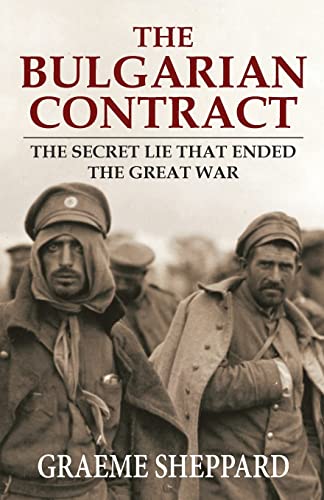
Read more: Graeme Sheppard, “The Bulgarian Contract: The Secret Lie That Ended the Great War.”
On the other side of the front stood the Allies, who gradually established better conditions for a major offensive during 1918. The Allied armies had substantial reserves of manpower and equipment, while Thessaloniki served as an important base for supplies and the concentration of forces.
With Greece joining the Entente, the Greek army was gradually organized and incorporated into military operations. This made it possible to concentrate a larger Allied force along the front and make better use of the available units.
By the summer of 1918, the Allied command had begun making serious preparations for a major offensive. Over the following months, fresh units, artillery, ammunition, and engineering equipment were transferred to the front. Roads and communications were improved at the same time, and preparations were carefully concealed to prevent the location of the main attack from being discovered.

Morale was particularly strong among the Serbian army. After withdrawing from Serbia in 1915 and spending almost three years outside their homeland, Serbian soldiers had a clear objective: to return to Serbia. For them, the breakthrough on the Macedonian Front was not merely a military operation, but also an opportunity to liberate their country and return home.
Preparations for the Allied Offensive
The decision to launch a major Allied offensive on the Macedonian Front took shape gradually during the summer of 1918. Following the failure of the German offensive on the Western Front, the Allied command once again turned its attention to the Balkans.



In June 1918, General Louis Franchet d’Espèrey took command of the Allied Army of the East in Thessaloniki, succeeding General Adolphe Guillaumat. Guillaumat had previously replaced General Maurice Sarrail, and in 1918 he was recalled to France and appointed to a senior position in the French High Command.

During the summer, Allied political and military authorities began considering the possibility of an offensive in the Balkans. In July, it was agreed that preparations for such an operation should continue, although the final launch of the offensive remained conditional on further political approval. This allowed d’Espèrey to continue preparations and gradually concentrate troops and equipment without immediately revealing the full scale of the planned operation.

At the same time, the plan had to be coordinated with the interests and priorities of the principal Allied powers. Support from Great Britain and Italy was particularly important, as each country had its own strategic priorities and limited military resources [7].

In early September, General Guillaumat traveled to London and Rome, where he secured the support of the British and Italian governments for the planned operation. The preparations had now received the necessary political backing and could move towards the immediate planning of the attack.

Concentration of Forces
Meanwhile, an extensive and carefully concealed logistical operation was underway on the Macedonian Front. The Allies gradually transferred artillery, ammunition, engineering equipment, and fresh units to the sector where the main attack was planned.

Particular attention was paid to preparing the difficult mountainous terrain. Roads and approaches to the forward positions were improved, while engineering units worked on constructing and preparing artillery positions. Some of the heavy artillery was deployed at high elevations on Nidže Mountain, enabling the Allies to concentrate considerable firepower immediately before the offensive began.
The preparations were conducted with a high degree of secrecy. The movement of troops and military equipment took place gradually, artillery positions were camouflaged, and the Allied command sought to conceal the precise sector in which the main attack would be launched.

The Bulgarian command was aware that the Allies were preparing a major operation, but it failed to fully grasp the scale of the concentration of forces or accurately identify the direction of the main attack. This combination of careful concealment, the gradual concentration of forces, and the choice of a difficult mountainous sector was intended to give d’Espèrey an element of surprise [9].
By early September, the Allied preparations were essentially complete. Considerable infantry and artillery forces had been concentrated at the Dobro Pole front, with a supply and support system established behind them. The next step was to select the precise moment to begin the artillery bombardment and the assault.

Why Was Dobro Pole Chosen?
The choice of Dobro Pole was not accidental. The Allied command was looking for a location where a powerful, well-prepared attack could not only break through the first line of Bulgarian defences but also trigger a wider collapse of the front. The idea of attacking the Bulgarian positions at Dobro Pole had emerged as early as 1916, and by the summer of 1918 this sector had once again emerged as particularly suitable for a decisive breakthrough.

Dobro Pole lies in a high, difficult-to-access mountainous area at an elevation of approximately 1,800 metres. The terrain around Dobro Pole, Vetrenik, and Sokol presented a serious natural obstacle to any offensive operation. Precisely because of the rugged mountain terrain, the Bulgarian positions in this sector were considered difficult to capture, which further contributed to the element of surprise.



However, the difficult terrain also had its weaknesses. The Bulgarian defensive positions were not developed in sufficient depth to stop a major breakthrough. Behind the first defensive line, there was no sufficiently strong and well-prepared secondary defence, while additional forces and reserves were relatively far from the forward positions and the terrain was difficult for rapid deployment of reinforcements. The Allied command estimated that a successful breakthrough at Dobro Pole could split the Bulgarian forces and disrupt the entire defensive system.

Transport and the supply of the positions posed a serious problem for the Bulgarian army. The mountainous terrain around Dobro Pole and Mariovo considerably hindered the movement of personnel, ammunition, food, and other military equipment.
During the war, passable roads were constructed across the mountains in almost every direction from the main railway station at Gradsko, which served as the army’s main base. In certain sections, narrow-gauge railways and a cableway were also built, connecting Gradsko station with Prilep.


Later, towards the end of the war, the cableway was extended via Belovodica and Rasim Bey’s Bridge to the village of Polčište, located behind the Second Division. The cableway’s transport capacity was far from sufficient to meet the army’s enormous needs.
From Panteleimon station (Polčište), the cableway’s terminus, all supplies had to be transported further by pack animals or carried on soldiers’ backs. Due to exhaustion, only one-third of the horses remained, and half of those were unfit for service, forcing soldiers to replace them. According to the testimony of soldier B. Draganov, artillery ammunition was carried by hand from the Gradeshka River to the front line, a distance of 4–5 kilometres. Some shells required as many as four soldiers to carry them, and more than 3,000 shells were transported in this way [3].
This meant that the supply problem was not merely a question of how much material could be obtained, but also whether it could be delivered to the forward positions in time.
The local population was also used to build and maintain communication lines at the front, often under compulsion and in exceptionally harsh conditions [11].

Supply problems directly affected the condition of the soldiers. The positions around Dobro Pole were situated in a high mountainous area characterised by long cold periods, snow, low temperatures, and difficult conditions for movement and accommodation. For months, soldiers were exposed to cold, dampness, and physical strain, while supplying food, clothing, footwear, and other equipment became increasingly difficult.
Prolonged warfare, shortages of materials, and harsh conditions at the front seriously affected the soldiers’ physical endurance and morale. By 1918, morale in the Bulgarian army had deteriorated considerably, and the command was facing increasingly frequent cases of desertion and refusal to fight. At the same time, the transfer of German troops and equipment to the Western Front further weakened the position of the Central Powers on the Macedonian Front.


On the opposite side, in the Požarsko area of present-day Greece, the Allies had a much better-organised communications and supply system. Thessaloniki served as the main Allied base. Supplies and ammunition were transported by rail from there to various stations on the railway line leading to Bitola, from where additional routes branched out towards the positions along the front line.
In the days leading up to the offensive, the Allies succeeded in concentrating substantial forces, artillery, and equipment in the sector where the attack was planned.

Dobro Pole was chosen because the combination of surprise, the concentration of Allied forces, artillery superiority, and the weakening Bulgarian defences could achieve far more than a local tactical success. The objective was to create a breakthrough that would disrupt the entire Bulgarian front and allow a rapid advance towards the Vardar Valley, Gradsko, and further north.
The Bulgarian Army Before the Attack on Dobro Pole
In the autumn of 1918, the Bulgarian army had a total of 878,000 soldiers, of whom 608,000 were at the front and 180,000 were deployed in the interior, throughout Bulgaria and the occupied territories [3]. According to the 1914 census, Bulgaria had a population of 4,240,000.
The area where the main attack was to take place was defended by the 2nd and 3rd Divisions, which were not under the same immediate command. In the event of a powerful attack and disrupted communications, this would have made it more difficult to coordinate the defence quickly. Although the terrain was difficult to attack, the long front line and limited ability to move reserves rapidly made the defence more challenging.

Another problem was the situation within the highest levels of the military leadership. On 8 September 1918, just as an offensive on the front was expected, General Nikola Zhekov, commander-in-chief of the Bulgarian army, left for Vienna to receive medical treatment. His duties were assumed by his deputy, General Georgi Todorov. However, during the main attack on 14–15 September, Todorov was in Sofia attending ceremonies marking the visit of the King of Saxony. He managed to return to the front on 16–17 September [3].
Interestingly, 100 of the best soldiers and officers from the 10th Rhodope Infantry Regiment, stationed in this sector, were sent to the ceremonies in Sofia marking the Saxon king’s visit. General Ivan Rusev, commander of the 2nd Division, had previously objected, warning that there were signs of an impending Allied attack and that withdrawing the best officers and soldiers from their positions at that particular moment was unwise. [8]
The Bulgarian command knew that an attack was being prepared on the opposite side, but it did not know precisely where it would take place, even though some intelligence reports specifically pointed to Dobro Pole.
Balance of Forces Before the Offensive
In the summer of 1918, the Allies faced difficulties bringing new military formations to the Macedonian Front. British and French forces were also engaged in other theatres of war, while the German spring offensive on the Western Front placed additional pressure on French reserves. Consequently, the Allied commander, General Louis Franchet d’Espèrey, had to distribute the forces already available to establish an advantage in the selected attack sector.
Greece also played an important role in the broader Allied strategy. In June 1917, it officially entered the war on the side of the Entente. Allied assistance contributed to the strengthening and reorganisation of the Greek army, whose units participated in operations on the Macedonian Front. Nevertheless, the main attack at Dobro Pole was carried out primarily by Serbian and French forces, while Greek units played roles in the wider offensive and in linking different parts of the Allied deployment.
Before the offensive in September 1918, the Allies on the Macedonian Front had a multinational army of approximately 618,000 soldiers: 180,000 French troops, around 50% of whom came from the colonies; 140,000 Serbian; 135,000 Greek; 120,000 British; 42,000 Italian; and 1,000 Albanian troops [12]. Opposing them was the Bulgarian army, supported by German units at key positions, with a roughly comparable total number of troops.
It should be noted that only approximately one-third of these soldiers were deployed along the front line, which stretched from Lake Ohrid to the Strymonian (Orfano, Struma) Gulf. When considering only infantry troops immediately available for combat, the Allies had 177,576 rifles, compared with 172,200 on the side of the Central Powers. In other words, the balance of forces along the entire front was approximately equal.
By regrouping Allied forces in the sector where the main attack was to take place, the Allies established a relative numerical advantage, creating a prerequisite for success. In that section of the front, they had 36,500 against 11,600 effective rifles, as well as a marked superiority in machine guns, light machine guns, artillery, and aircraft, as shown in the accompanying table.

Comparison of the forces of the Allies and the Central Powers on September 13, 1918, on the section of the front where the main attack was planned – Dobro Pole [12].
Comparison – Allies : Central Powers
- Battalions – 75 : 26
- Effective guns – 36.500 : 11.600
- Machine guns – 757 : 245
- Light machine guns – 2610 : –
- 37mm canons – 74 : –
- Aasen mortar – 206: 172
- Canons – 472 : 101
- 58mm and 240mm trench mortar – 108:45
- Squadrons – 18 : 3
- Aircraft – 81:24
By transferring and concentrating their forces, the Allies sought to establish clear local superiority at the main section of the attack. By concealing their preparations and carefully choosing the moment of the assault, they also aimed to exploit the element of surprise [13].
The difference between the two sides was not limited to the number of artillery pieces. Ammunition supplies, the ability to sustain artillery fire, reconnaissance, and coordination between different formations were also important. The Allies had a logistical network behind the front, whereas Bulgarian units operating in the mountainous terrain depended on limited roads and pack animals and horse-drawn transport to supply their forward positions.
Allied aviation provided additional support through reconnaissance and attacks on selected targets. Together with the artillery bombardment and the concentration of infantry, these assets increased the Allies’ ability to deliver a powerful blow within a limited area.
September 14 — Artillery Preparation for the Offensive
On 14 September 1918, the artillery preparation for the Allied offensive on the Macedonian Front began. The plan called for a massive bombardment of Bulgarian positions, followed by an infantry assault at Dobro Pole the next morning, on 15 September.
A coded message was used to coordinate the start of the operation: “Send 14 officers and 8 soldiers.” The message indicated that artillery fire should begin at 8 a.m. on 14 September, provided weather conditions were suitable.
Fog was a significant factor in planning the operation. In the early morning hours, it covered Dobro Pole and the surrounding heights, limiting visibility. As daylight increased, conditions gradually improved, allowing the Allied forces to begin the planned artillery bombardment.
The Serbian commander Duke Živojin Mišić sent the agreed-upon code at 6:15 a.m., after determining that weather conditions permitted the operation to begin.
At 8 a.m., Allied artillery opened fire along the entire front line. Approximately 570 guns were used to bombard the sector where the main attack was planned, covering a front of about 30 kilometres. The bombardment targeted trenches, observation posts, machine-gun nests, shelters, and barbed-wire obstacles. The objective was not only to inflict casualties but also to damage defensive lines, sever telephone communications, and disrupt the command structure of Bulgarian units.
Artillery fire continued throughout the day, with pauses for observation and aerial reconnaissance. Allied aircraft were tasked with monitoring the results of the bombardment and helping assess the damage inflicted on enemy positions.

Bulgarian artillery returned fire, but the Allies’ firepower and the intensity of the bombardment placed the defenders under considerable pressure. In several locations, trenches and shelters were damaged, while communications between units were disrupted.
The shelling continued throughout the night, with a brief pause when reconnaissance patrols were sent out to inspect the forward positions. Their reports indicated that the barbed wire had been damaged sufficiently in several places to allow infantry to pass through the obstacles.

September 15 — The Battle of Dobro Pole
On the morning of 15 September 1918, the long-prepared Allied infantry assault began. At 5:30 a.m., the Serbian Second Army and French colonial units advanced against the fortified heights. The main objectives were Dobro Pole, Sokol, Vetrenik, Kravica, and Kravicki Kamen — positions of crucial importance to the Bulgarian defence of this sector of the Macedonian Front.

The terrain was exceptionally difficult to cross. Steep slopes, rocky ridges, trenches, and machine-gun nests gave the defenders an advantage. Despite the artillery preparation of the previous day, the Bulgarian positions had not been completely destroyed, and Allied infantry encountered fierce resistance in several places.

Fighting for Vetrenik and Kravicki Kamen
In the Serbian sector, the Šumadija (Choumadia) Division attacked Vetrenik and the surrounding heights. The advance was difficult, and fighting continued even after some positions had been captured.
The French 17th Colonial Division attacked towards Kravica and the neighbouring positions. After fierce fighting, it succeeded in capturing Kravica. The Šumadija Division also played an important role in the attacks towards Kravicki Kamen, with its units supporting the French advance and attempting to outflank the fortified Bulgarian positions.

The Attack on Dobro Pole and Sokol
On the western side of the breakthrough zone, the French 122nd Division attacked towards Dobro Pole and Sokol. Some of the forward Bulgarian positions were conquered, and Allied units gradually advanced across the difficult mountainous terrain.
Dobro Pole was captured during the afternoon. Taking this height was particularly important because it disrupted the connections between Bulgarian defensive positions and opened the way for further advances. However, fighting for Sokol continued for longer. The Bulgarian defenders put up strong resistance, and the summit was not captured until the evening, with the participation and support of Serbian units. Flamethrowers were also used.


Despite the difficulties, by the end of the day the Allies had captured the key heights and broken through the first Bulgarian defensive belt.
By the end of the day, Bulgaria had lost approximately 40–50 percent of the troops engaged in the battle — around 3,000 prisoners, 2,689 killed, and 50 of its original 158 artillery pieces. Entente losses amounted to 1,850 French, 200 soldiers, and 158 Greek soldiers killed [16].


The success enabled the Allied forces to continue their advance and opened an opportunity for the Serbian First Army to join the wider offensive.

September 16–18 — The Breakthrough Expands
After breaking through the front line, Allied forces continued advancing deep into the Bulgarian defensive zone. On 16 September, Serbian units directed their attacks towards Kozjak and the neighbouring heights, aiming to widen the breakthrough and drive Bulgarian forces from their next defensive positions.

The fighting was fierce, and the advance was not equally successful along every part of the front. Nevertheless, the capture of Kozjak represented a significant success for the Serbian army. It opened new opportunities to advance towards the Tikveš Valley and deepen the breakthrough into the Bulgarian defensive zone.
Bulgarian forces attempted to halt the advance and establish a new defensive line. In some sectors, German units also provided support, attempting to slow the Allied pressure and cover the withdrawal of Bulgarian formations.
On 17 September, Serbian forces continued advancing along several routes. The Drina, Danube, Timok, and other divisions engaged the remaining Bulgarian strongholds, seeking to capture important heights and widen the corridor through which Allied units could move.
In some sectors, resistance was weaker, while in others Bulgarian and German units continued defending their positions. This uneven pattern shows that the breakthrough did not cause the entire front to collapse simultaneously. Instead, it gradually weakened the defences and made it increasingly difficult to maintain coordination between units.
As the Allied breakthrough deepened, the Bulgarian command faced an increasingly difficult situation. The withdrawal of individual formations, disrupted communications, and lack of fresh reserves made it harder to organise a new defensive line. The Allies, meanwhile, sought to exploit the momentum and turn their initial success into a broader operational advance.
The Retreat Towards the Crna River
In the following days, Allied units continued advancing towards the Crna River valley. On 18 September, Franco-Greek forces captured Staravina and Zovik and approached the crossings over the Crna River. At the same time, attacks on Bulgarian positions continued in other sectors of the front, along with efforts to prevent the establishment of a new, continuous defensive line.

The Crna River and the surrounding terrain offered opportunities to organise a new line of resistance, but the Bulgarian army was already under intense pressure. The Allied breakthrough forced Bulgarian units to retreat, and each new withdrawal made coordination between neighbouring formations more difficult.

Dojran – The Bulgarian Victory
On September 18, 1918, British and Greek forces launched a major offensive against Bulgarian positions near Lake Doiran. The attack was part of the broader Allied operation on the Macedonian Front. Its objective was to keep Bulgarian forces engaged in their positions and prevent reinforcements from being sent to the sector where Serbian and French units had already broken through the front at Dobro Pole.
At Doiran, however, the Allies encountered fierce resistance. The Bulgarian 9th Pleven Infantry Division, commanded by General Vladimir Vazov, occupied well-organized and fortified defensive positions. The defenders made effective use of the terrain, artillery, and machine-gun emplacements to repel the attacks.
On September 18, British and Greek units managed to penetrate parts of the Bulgarian forward positions, but heavy artillery fire and Bulgarian counterattacks forced them to withdraw from the captured areas. Despite enormous losses, the assault continued the following day but failed to break through the Bulgarian defenses. By the end of the fighting, the Allied forces had not achieved their main objective and had suffered heavy casualties (6,559–7,819 British and Greek, compared to 2,726 Bulgarian casualties.
The victory at Dojran demonstrated that, despite exhaustion and the deepening crisis on other parts of the front, the Bulgarian army was still capable of defending itself successfully when it had well-fortified positions and organized command.
Prilep, September 18 – The Last Attempt to Change the Course of Events
On September 18, 1918, after visiting the sector of the 3rd Infantry Division, General Georgi Todorov met in Prilep with the commander of the German 11th Army, General Kuno von Steuben, and the chief of staff of Army Group Scholtz, Colonel Schwerin [18].
Todorov proposed a general offensive towards Thessaloniki involving the Bulgarian 2nd and 1st Armies, together with the right wing of the German 11th Army. The idea was to regain the initiative and take advantage of a situation in which Allied forces were advancing at different speeds along separate sectors of the front.
The Bulgarian victory at Dojran also supported such a plan. In addition, some Bulgarian commanders believed that an attack from the sectors of the front that were not under threat could force the Allies to slow their advance and redirect forces to protect their own flanks.
Todorov’s proposal was rejected without any substantial arguments being given for its refusal [18].

At the meeting, it was decided to assist the units in the breakthrough sector. Neighboring formations were to hold their positions, while the command would determine the appropriate moment for any possible withdrawal. At the same time, options for creating reserves and preparing new defensive lines were considered, in the hope of gaining time for reinforcements to arrive.
An Opportunity That Was Rapidly Disappearing
Could Todorov’s proposal have changed the course of military operations? That remains a matter of military assessment. A concentrated counterattack might have created additional problems for the Allies, forced them to redirect some of their forces, or temporarily slowed their advance. However, there is insufficient evidence to claim that such an offensive would certainly have succeeded, much less that it would have changed the overall strategic situation.
Following the breakthrough at Dobro Pole, the Bulgarian defenses had been seriously disrupted, while the withdrawal of individual units and coordination problems made preparations for a new operation more difficult. The German command also had limited ability to send reinforcements quickly, as Germany was engaged in heavy fighting on the Western Front.
Thus, the meeting in Prilep reveals a clash between two different assessments of the situation: Todorov’s attempt to regain the initiative through an offensive strike, and the German command’s efforts to stabilize the front and gain time for an organized regrouping.
On September 18, possibilities for a counterattack were still being considered, but the opportunity to carry one out was rapidly narrowing. The breakthrough at Dobro Pole had already transformed the operational situation, and in the following days it became increasingly difficult to establish a defensive line capable of stopping the Allied advance.
Dobro Pole and the Road to the Thessaloniki Armistice
As Allied forces advanced towards the Vardar Valley, the main communication routes supporting the defenses were already under threat, making the organization of a new defensive line practically impossible. The withdrawal of Bulgarian units gradually developed into a broader military and political crisis.

Discontent within the army grew because of the years of warfare, heavy losses, shortages of food and equipment, and the exhaustion of the soldiers. Some soldiers refused to continue fighting, and the discontent developed into an open rebellion. In the second half of September, some of the rebellious soldiers headed towards Sofia, and on September 27 a republic was proclaimed in Radomir. This event, known as the Soldiers’ Uprising, further destabilized the Bulgarian authorities and accelerated the search for a way out of the war [19].
The Bulgarian government requested an armistice, and negotiations with the Allies were held in Thessaloniki. On September 29, 1918, at 10:50 p.m., the Thessaloniki Armistice was signed, bringing Bulgaria’s military operations against the Allies to an end. On the Bulgarian side, the document was signed by General Ivan Lukov, Andrey Lyapchev, and Simeon Radev, while the Allied signatory was General Louis Franchet d’Espèrey, Supreme Commander of the Allied Army of the East.
The armistice came into effect at noon on September 30, 1918.

The armistice required Bulgarian forces to withdraw from occupied territories in Serbia and Greece, the demobilization of most of the Bulgarian army, and the surrender of weapons and military equipment under Allied control. With this, Bulgaria ended its military involvement on the side of the Central Powers in the First World War.

Interestingly, two of the three representatives in the Bulgarian delegation, Andrey Lyapchev and Simeon Radev, were of Macedonian origin, having been born in Resen. Andrey Lyapchev later served as Prime Minister of Bulgaria from 1926 to 1931.
The Domino Effect – From the Bulgarian Armistice to the End of the First World War
With Bulgaria’s signing of the armistice on September 29, 1918, the Central Powers lost an important ally, and Germany’s overland connection with the Ottoman Empire was severed.
The Serbian army continued northward and entered Belgrade on November 1. Meanwhile, under pressure from Allied offensives in the Middle East and from British forces redirected there from the Macedonian Front, the Ottoman Empire signed an armistice on October 30.
As the Serbian army advanced, pressure also increased on Austria-Hungary, which, weakened by military defeats and internal national crises, signed an armistice on November 3, 1918.
Germany, now facing growing pressure on the Western Front and political unrest at home, was forced to seek an armistice.
The armistice with Germany was signed on November 11, 1918, at 5:10 a.m., in a railway carriage in the Forest of Compiègne, France. It came into effect at 11:00 a.m. that same day, when fighting on the Western Front ceased.
In the final hour alone, while awaiting the armistice, approximately 5,000 soldiers from both sides lost their lives on the Western Front.
Macedonian Soldiers at the Battle of Dobro Pole and on the Macedonian Front
In Macedonia, the story of “Brother Against Brother on the Macedonian Front” is well known, as recounted by Stale Popov in his novel “Krpen Zivot”.
Some publications and authors deny the involvement of Macedonian soldiers in various sectors of the front, often basing their arguments solely on the deployment of military divisions. This section will examine that question.
Immediately after war was declared between Serbia and Austria-Hungary, Serbia carried out mobilization throughout its territory. In Vardar Macedonia, this process was slow and encountered difficulties. Between July 26 and 30, 1914, 12,000 Macedonians were recruited and, after brief training, sent to the front [20].

These soldiers were assigned to various divisions of the Serbian army. The Bitola Infantry Regiment became part of the Drina Division of the First Call, the Bregalnica Regiment joined the Šumadija Division, and the Vardar Regiment was assigned to the Danube Division. This first recruitment included only young recruits of the Christian faith. Later, because of the growing need for manpower, general mobilization was introduced [20].
From 1914 to the middle of 1915, a total of 53,088 soldiers were recruited from Vardar part of Macedonia, with the largest share—approximately 25,337 soldiers—coming from the Bitola Divisional District [20]. In addition to soldiers, 12,848 horses, 5,851 oxen and cows, 1,175 male and female buffaloes used as draft animals, 377 mules, 1,944 donkeys, and 2,697 horse- and ox-drawn carts were mobilized.
The Vardar Division was formed in October 1915 and encompassed the regimental districts of Skopje, Tetovo, Kumanovo, and Preševo [21].
There were also many people in Macedonia who opposed and evaded mobilization—27,786 individuals who fled to Bulgaria, Greece, or the mountains. Desertion was also common among soldiers who had already been recruited and sent to the front line.
It is not known exactly how many Macedonian soldiers survived the battles at the beginning of the war. After Bulgaria entered the war, Austria-Hungary handed over captured soldiers to Bulgaria, where they were incorporated into Bulgarian military units.
It is also unknown how many soldiers survived the Serbian army’s retreat across Albania and reached Greece, where they were assigned to the newly formed Macedonian (Salonika) Front as part of the reorganized army.
On the Macedonian (Salonika) Front, many Serbian volunteer soldiers from the diaspora, originating from various parts of the Balkan Peninsula, were incorporated into the Vardar Division. As a result, the Vardar Division was renamed the Yugoslav Division.
The Macedonians in the other ethnic regions shared a similar fate.
In Aegean Macedonia, the Greek authorities recruited approximately 20,000 Macedonians [23], while Bulgaria recruited the largest number of soldiers.
Before Bulgaria entered the First World War and attacked Serbia, the 11th Macedonian Division was formed in the autumn of 1915. It succeeded the Macedonian-Adrianopolitan Volunteer Corps, which had been established during the Balkan Wars. The division consisted of approximately 34,745 soldiers and officers, mainly Macedonian volunteers and refugees already living in Bulgaria. The division was reorganized in May 1917 and, during the 1918 breakthrough, was stationed in the sector around Lake Dojran [24].
After the occupation of Vardar Macedonia and the establishment of the Bulgarian military administration, the recruitment system was extended to the local population. As the need for manpower increased, men over the age of 40 were also included and assigned to various parts of the front. Some were sent directly to the front line to reinforce existing units, while others were assigned to rear-area duties. According to research by Bulgarian military historian Dimitar Minchev, approximately 80,000 people from Macedonia were registered in recruitment lists between 1916 and 1918 [24].

Taking the figures presented above into account, it can be concluded with confidence that soldiers from different parts of Macedonia served on both sides of the front line. Unfortunately, their exact number is difficult to establish.
Dobro Pole After the War and the “Bronze Hand” Monument
In the years following the First World War, Dobro Pole remained alive in the memories of the surviving soldiers. Veterans and participants in the battle returned to the place where they had faced the horrors of war, paying tribute to the fallen and recalling the events that had forever marked their lives.
During the postwar period, as life in Mariovo gradually began to recover, the area around Dobro Pole also came back to life. People lived and worked in this mountainous region, which only a few years earlier had become one of the most significant battlefields on the Macedonian Front.
The “Bronze Hand” Monument
In the village of Gradeshnica, the story of the “Bronze Hand” monument is still passed down today. The monument was erected at Dobro Pole in 1938 to mark the twentieth anniversary of the breakthrough. It was intended as a lasting memorial to the battle and to the sacrifice of the soldiers who took part in it. French veterans were behind its creation, and the delegation that attended the unveiling ceremony was led by Louis Cordier.


The monument was created by the French artist and sculptor Marcel Canguilhem (1895–1949). He was illustrator, and sculptor, also known by the artistic name Cel-le-Gaucher, meaning “the left-handed one.” During the First World War, he served with the French infantry on the Macedonian Front. On September 15, 1918, during the fighting near the nearby Sokol hill, his right hand was severed. According to a legend passed down in the village of Gradeshnica, he wrapped it in cloth and hid it beneath a rock. After the war, he worked exclusively with his left hand, which gave rise to his artistic name.
According to available information, Marcel created at least four monuments of this type. One was installed and officially unveiled at Dobro Pole on September 19, 1938, in cooperation with the Yugoslav (Serbian) authorities of the time.
Local tradition recounts that the ceremony included several formal events, which were interrupted when a telegram arrived for the French delegation carrying news of hostile German activity, shortly before the beginning of the Second World War.
The threat of another war was already being felt across Europe. The monument commemorating the previous great war was unveiled at a time when peace was already seriously threatened.
Different accounts exist regarding the fate of the monument, which eventually disappeared from Dobro Pole.
According to some accounts, it was destroyed in 1942 [25], during the reoccupation of Macedonia by Bulgaria and Germany.
According to local accounts, the monument was removed and sold as scrap metal during one of the collection campaigns organized in Yugoslavia, when collecting scrap metal was an important source of livelihood for many families in Mariovo.
Although the monument disappeared, the place where it had stood remained in the memory of the local population as the “Bronze Hand,” and its story was passed down through generations.
The monument’s story resurfaced in 2012, when French researcher Franck Roger, from the association dedicated to commemorating soldiers of the Dardanelles and the Eastern Front (Association Nationale pour le souvenir des Dardanelles et Fronts d’ORIENT), together with Fabien Schaeffer and local residents, identified the site where the monument had once stood and brought it back to public attention.
A few years later, the Municipality of Novaci, in cooperation with our association, Off-Road Macedonia, installed an information board at the site where the monument once stood.

Meanwhile, Franck Roger discovered another of Marcel’s monuments, made in 1937, in the cemetery at Mont-de-Marsan, the artist’s birthplace. The monument is identical to the one that had been installed at Dobro Pole.
During the commemoration of the centenary of the Battle of Dobro Pole, an attempt was made to install a replica of the monument, made from composite material at Dobro Pole, but instead the replica brought to Macedonia remained at the French military cemetery in Bitola.

Dobro Pole Today
Today, Dobro Pole is a place where history and the fate of the surrounding villages intertwine. Somewhere between the national border, the dense forest, and the remains of the front, the memory endures of a battle that hastened the end of the war, as well as of a once-vibrant world that gradually disappeared through emigration. Once at the center of a major European military conflict, the area is now one of those quiet, remote places where nature has reclaimed the land and human presence has become rare.
The area that a century ago witnessed fierce fighting and the movement of large military formations is now a quiet, almost deserted mountain region. The villages on both sides of the border share a similar fate: Mariovo and Meglen have gradually lost more and more of their inhabitants.
In the decades following the First World War, right up to the final decades of the twentieth century, people continued to live and work in these villages. They cultivated fields, raised livestock, and traveled through the mountains around Dobro Pole.
However, gradual emigration, a lack of employment opportunities, and changes in lifestyle eventually emptied these once-thriving rural communities. In the Mariovo region, as well as in the villages of the Meglen area on the Greek side, many homes were left empty. The roads connecting villagers to their mountain properties are used less and less, and economic activity in the region has also declined.
Today, Dobro Pole can be reached by a difficult road that is impassable in places and leads deep into the forest. The remains of former military positions and the surrounding mountain landscape are silent witnesses to the events of September 1918. People are rarely encountered here, and the silence stands in stark contrast to the artillery fire, assaults, and human losses that marked this area more than a century ago.
Event: Dobro Pole – 15 September 1918 / 2018 – 100 Years Since the Breakthrough on the Macedonian Front
To mark the centenary of the Battle of Dobro Pole, our association on September 15th 2018 organized a one-day 4×4 excursion to this historic site.
The initiative aimed to pay tribute to civilian and military victims of WW1, preserve the memory of the events of 1918, and encourage interest in the region’s cultural and historical heritage.
The activity combined a commemorative event, a 4×4 convoy drive, and the promotion of Mariovo as a destination with significant First World War heritage.
Organizer: “OFF ROAD – MACEDONIA” Association for Exploration and Travel, Bitola.
In cooperation with: the Municipality of Novaci, the Association for the Preservation of the Macedonian Front, and the French National Association for the Remembrance of the Dardanelles and the Eastern Front.
How to Get to Dobro Pole
Dobro Pole is a remote mountain destination surrounded by forests and unspoiled nature, and access is not straightforward. The route crosses mountainous terrain, so anyone planning an independent visit should carefully plan their journey and take road conditions and terrain into account. More detailed information and access instructions are provided in the separate article “How to Get to Dobro Pole.”
For those who wish to visit the site in the simplest and most organized way, we recommend the 4×4 safari tours organized by our association. These tours provide easier access to this remote historic site and an opportunity to explore the natural beauty and First World War heritage of Mariovo.
Literature and sources
[1] Battlefield Maps – Balkan Front | Operations in Salonika 1916
[2] Ангел Џонев, Кюстендил – военната столица на България през Първата световна война.
[3] Урокът от Добро поле, Изпитанията във войната 1915 – 1918 | от Димитър Азманов | 1935
[4] Државен архив на Република Македонија – оделение Битола, Фонд Манаки
[5] Proboj Solunskog Fronta, Author: Nedeljković, Lj. A., Belgrade, Serbia, October 1928
[6] Ратни албум : 1914-1918 | Popović, Andra | 1926
[7] Luigi Villari, The Macedonian Campaign, 1922
[8] Француски воени карти
[9] Македонија во времето на Балканските и Првата светска војна (1912-1918), Петар Стојанов, Институт за Национална Историја, 1969
[10] Bilder vom mazedonischen Kriegsschauplatz. Im Auftrage eines Generalkommandos herausgegeben von der Münchener Graphischen Gesellschaft. | Leutnant d.L. gesammelt und zusammengestellt von Ludwig von Buerkel, Münchener Graphischen Gesellschaft,
Published by Verlag der Münchener Graphischen Gesellschaft Pick & Co
[11] „Градешница” – монографија – автор: Трајко Босеовски | Година на издавање: 1997 // УДК 908.497.17
[12] Solunski front | Milivoje Alimpić | Београд : Војноиздавачки завод, 1967
[13] Jacques Ancel, La Croisade de Salonique (12 octobre 1915–13 novembre 1918), Revue des Deux Mondes, 6e période, t. 55, 1920)
[14] Istorija Jugoslovenskog vazduhoplovstva | Sava J. Mikic | Beograd 1932
[15] Breakthrough on the Macedonian Front during the First World War – military archival material
[16] Battle of Dobro Pole (Wikipedia.org)
[17] French Military Maps
[18] Станчо Станчев и Тодор Петров, История на сухопътните войски на България. Том първи, Софија, 2014 pg 260
[19] Radomir Rebellion (Wikipedia.org)
[20] Солунско примирје [Wikipedia.org]
[20] БИТОЛСКИОТ РЕГИОН ЗА ВРЕМЕ НА ПРВАТА СВЕТСКА ВОЈНА (1914-1918) (докторска дисертација) | м-р Петар Солаковски ментор | проф. Д-р Михајло Миноски
[21] Вардарска дивизија | Министарство културе Република Србија
[22] „Битола низ стари разгледници“ | Автор: Димче Најдов | Издавач: НУ Завод и Музеј Битола | ISBN 978-608-4754-01-5 | COBISS.MK-ID 96689930
[23] Александар Апостолов – ВАРДАРСКА МАКЕДОНИЈА ОД ПРВАТА СВЕТСКА ВОЈНА ДО ИЗБОРИТЕ ЗА КОНСТИТУАНТATА — 28 НОЕМВРИ 1920 ГОДИНА
[24] Минчев, Димитър. Участието на населението от Македония в българската армия през Първата световна война 1914–1918 г. София: Военно издателство, 1994
[25] Vlasis Vlasidis | The Serbian Heritage of the Great War in Greece


